Is Space Center Houston Worth It? An Honest Look
What visitors consistently love about Space Center Houston, what they consistently complain about, and who it's best for — drawn from tens of thousands of reviews.
Short answer: yes, for most visitors — with one condition.
The condition is planning. Space Center Houston is a place where a 5-star day and a 3-star day happen in the same building on the same date, and the difference is almost entirely logistics, not what’s on display.
Here’s the full picture, drawn from more than 60,000 visitor reviews across Google, TripAdvisor, Viator and GetYourGuide: what people consistently love, what consistently frustrates them, and who shouldn’t bother.
If you decide it’s worth it, book online. It’s about $5 cheaper per ticket than the gate, and timed slots sell out on busy days. The Space Center Houston Admission Ticket (from $29, 4.5★ · 3,866 reviews) is the official timed-entry ticket with free cancellation, and our tickets guide breaks down every tier and price.
What the Ratings Say
| Platform | Rating | Reviews |
|---|---|---|
| 4.6 / 5 | ~47,000 | |
| TripAdvisor | 4.3 / 5 | ~10,000 |
| Viator | 4.1 / 5 | ~1,500 |
| GetYourGuide (official admission ticket) | 4.5 / 5 | 3,866 |
| Trip.com | 4.7 / 5 | — |
Figures as of mid-2026; the GetYourGuide figure was checked in September 2026. Counts move every day.
TripAdvisor ranks it #27 of 988 things to do in Houston, with a Travelers’ Choice award. WhichMuseum ranks it the #1 science and technology attraction in Texas and #8 in the US.
The gap between Google (4.6) and TripAdvisor (4.3) is real, and it tells you something. Google captures everyone — families, tourists, people who hadn’t thought much about it. TripAdvisor skews toward more deliberate, critical travellers who write detailed accounts. Both groups are telling you something true.
On the Viator breakdown: roughly 77% rate it 4–5 stars, about 10% give it 3 stars, and about 13% give it 1–2 stars. That’s a meaningful negative tail — bigger than you’d see at, say, a pure theme park. Nearly all of it comes from operations: queues, heat, parking and food.
What People Love
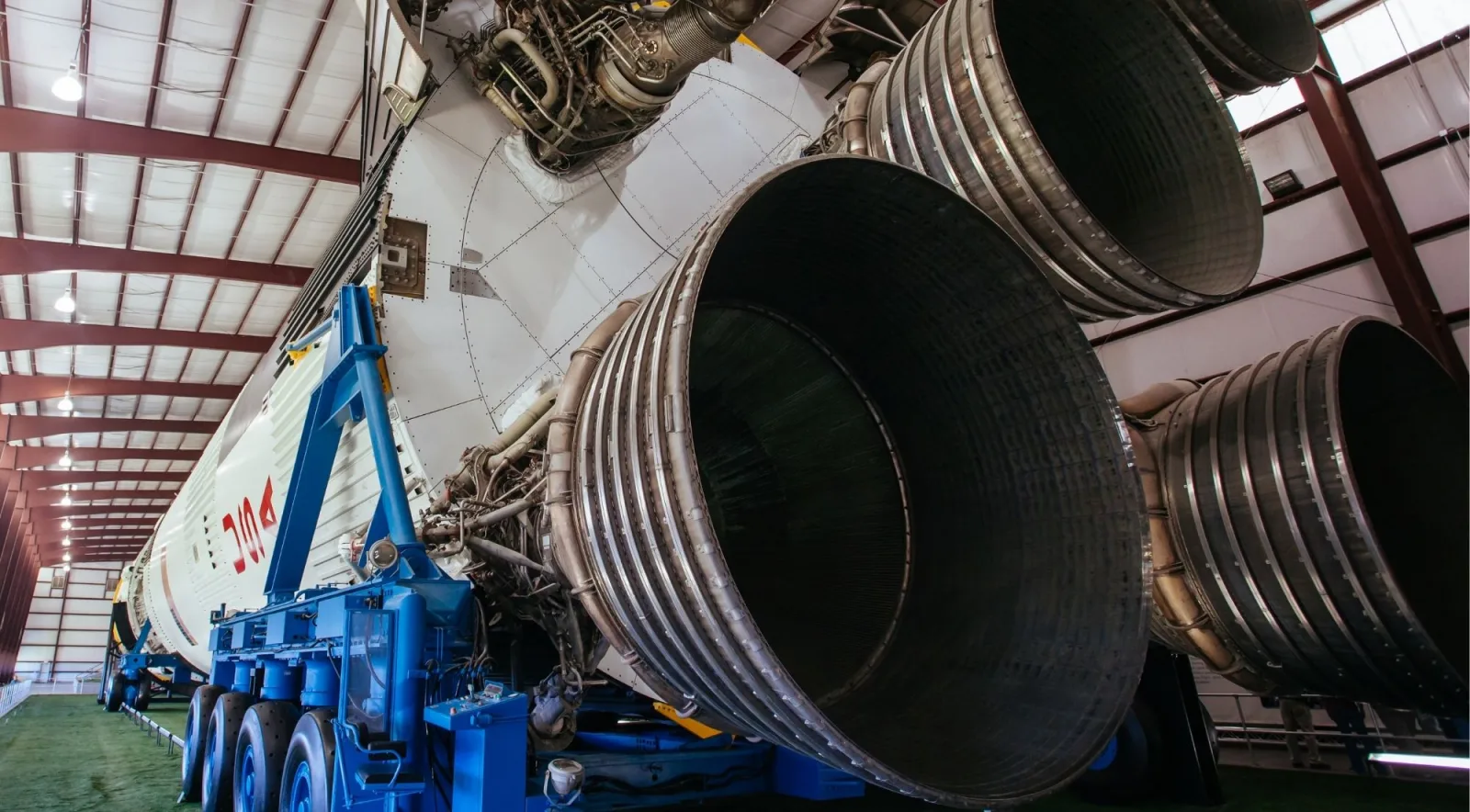
The Saturn V
The single most consistently praised thing at Space Center Houston — and visitors say it again and again: photographs don’t prepare you for it.
It’s one of only three surviving Saturn V rockets in the world, and the only one made entirely of flight-certified hardware. 363 feet long, lying horizontally so you can walk its full length in an air-conditioned building. Reviewers describe real awe at the scale, and a moment they carry with them.
See: Rocket Park and the Saturn V.
Historic Mission Control
The restored Apollo-era control room is the emotional peak for space enthusiasts. Visitors describe it as one of the most affecting places they’ve ever stood — and with reason, because it’s the actual room where NASA ran the Apollo 11 landing and the Apollo 13 rescue.
The roughly $15 upgrade is the most consistently praised add-on in all the reviews. If you have any real interest in NASA history, don’t skip it — and book it when you buy your admission, because it sells out. The NASA Historic Mission Control Tram Tour + General Admission (from $100, 4.8★ · 173 reviews) bundles the two into one booking.
See: Historic Mission Control.
Independence Plaza
The shuttle replica Independence mounted on top of the genuine NASA 905 Boeing 747 — the only display of its kind anywhere, and the only place the public can walk inside both. The aircraft is real; the shuttle is a replica. Once visitors understand that the workhorse beneath is the actual thing, the exhibit lands differently.
See: Independence Plaza.
The Tram Onto the NASA Campus
Crossing onto the working Johnson Space Center campus — the only way the public gets onto federal NASA property — is what makes this visit different from any other museum. Reviewers consistently name the Astronaut Training Facility route, with its elevated view over the mockups where astronauts train, as the highlight of the day.
Staff
Even negative reviews almost always note that the staff are friendly and helpful. This comes up in 1-star reviews too.
What Surprises People
- How close you can get to real Apollo hardware, including the Apollo 17 command module
- The moon rock display, and the touchable Apollo 17 sample in the Lunar Samples Vault — see our moon rocks guide
- The scope of the visit — “we spent 5+ hours and still didn’t see everything”
- The current spaceflight content: the Artemis and Orion exhibit, the SpaceX Falcon 9 first stage, and knowing that the programme you’re learning about is being run next door
Other Experiences Worth Pairing With Your Visit
Most of the complaints below are about getting there, the heat and the queues, and several bookings take those out of your hands. A round-trip shuttle from downtown Houston (from $67, 4.8★ · 304 reviews) removes the drive and the parking fee; a NASA-expert-guided visit (from $96, 4.7★ · 62 reviews) handles tram strategy for you. Combo tickets pair NASA with a downtown Houston city tour (from $98, 4.4★ · 523 reviews) or the Houston tunnel system (from $118, 4.9★ · 69 reviews), and the Houston CityPASS (from $72, 4.6★ · 266 reviews) folds the Space Center in with the Houston Zoo and the Museum District. Down the road, Kemah Boardwalk makes an easy lunch stop and Galveston is under an hour south.
What People Consistently Complain About
Tram Queues and the Heat
The most operationally damaging issue in the reviews, and the main driver of 3-star days.
The three free tram tours — Rocket Park, the Astronaut Training Facility, and the NASA Campus — cannot be reserved in advance. You collect a timed boarding pass from Guest Services or through the app on arrival, and passes for the most popular route (the training facility) regularly run out by around midday on busy days.
The trams are open-air. In a Texas summer, that means standing in a queue in direct sun and then riding in what reviewers describe as an open vehicle in 100°F heat.
The fix is simple but not advertised prominently: arrive at opening and go straight to Guest Services for your boarding pass before you do anything else. This is the single piece of advice that separates the good days from the frustrating ones.
See: the NASA Tram Tour explained.
Parking
$10 per vehicle plus a service fee, paid on-site by scanning a QR code — on top of an admission price that already runs roughly $30–$40 per person.
The cost itself is a near-universal irritant (“not sure why you have to pay for parking on top of hefty entry fee”). But the mechanism generates its own complaints: the QR system requires a US phone number for SMS verification, and international visitors frequently find it doesn’t work. The official solution — pay at the Guest Services desk instead — isn’t signposted at the lot.
Members park free. That’s part of why the annual membership pays for itself in about two visits.
Food
Amusement-park prices in the Food Lab: reviewers describe $12 for nachos, $6 for a soda, $60 for a family lunch. The food itself is described as acceptable; the price-to-quality ratio is not.
The practical fix: use your same-day re-entry privilege. Get a hand stamp at Guest Services before you leave, go and eat somewhere else — there are options in Clear Lake, and Kemah is 15 minutes away — and come back. Space Center Houston explicitly allows this.
The NASA Campus Tram Route
There are three free tram routes. Two of them — Rocket Park and the Astronaut Training Facility — are consistently praised. The third, the campus tour, is consistently called the weakest.
Reviewers describe a narrated drive through the grounds with minimal stops and a PA system that frequently can’t be heard over the engine noise. One reviewer called it “a complete waste of 35 minutes.” If you only have time for one or two trams, prioritise the training facility.
“Too Child-Focused” for Some Adults
A meaningful minority of reviewers — particularly engineers, returning visitors, and people who’ve been to Kennedy Space Center — describe the museum exhibits as shallow, designed mainly for children, and heavier on theatrical presentations than on depth.
Long-time visitors comparing it to its earlier, more interactive form make the same point. The core artifacts — the Saturn V, Mission Control, the shuttle display — are world-class. The surrounding educational exhibits draw more mixed opinions.
The Exhibit That Most Often Disappoints
The Orion and Artemis display draws some of the sharpest criticism despite covering an exciting programme. Several reviewers describe the capsule mockup as looking unfinished. What most of them miss is the one flown object in the room — the Artemis I manikin, Commander Moonikin Campos — which our Artemis guide explains.
Who It’s Best For
Families with school-age children (roughly 5–14) — the most consistent 5-star group. The scale, the interactive elements, the live shows and the trams hit differently for children. Our family guide has the age-by-age breakdown.
Adult space and history enthusiasts — strong 5-star potential, if they book Mission Control in advance and plan properly. The Saturn V, the real Mission Control and the moon rocks are among the finest artifacts in any science museum anywhere.
Casual tourists doing Houston in a day or two — good, with managed expectations. Budget the full day; don’t come for a quick look.
People comparing it to Kennedy Space Center — the two are different experiences, best understood as complementary. Kennedy is launches and rockets and the actual Atlantis shuttle. Houston is Mission Control, the working NASA campus, and the history of flight operations. Reviewers who’ve done both generally say both are worth the trip. Reviewers who expected Houston to be “as impressive as Kennedy” often come away disappointed.
Who It Might Not Be For
- Anyone who only has 2 hours. This isn’t a quick stop.
- Visitors who can’t manage queues in heat — the outdoor trams are exposed.
- People who want deep, technical, engineering-level content throughout the museum. The artifacts are superb; the interpretation is broad.
- Visitors with serious mobility limitations — contact the centre before going. Mission Control involves stairs (with an elevator available), the trams have ramps but involve outdoor exposure, and Independence Plaza’s elevators have been out of service. See our accessibility notes.
The Kennedy Comparison
The question comes up constantly in reviews, so here’s a straight answer.
Kennedy Space Center wins on: live launches (if timed right), the actual Space Shuttle Atlantis, real launch pads on bus tours, and spectacle.
Space Center Houston wins on: the actual restored Mission Control room, the working NASA campus you can enter by tram, the most authentic Saturn V of the three that survive, and being part of NASA’s operational present, not just its launch history.
Most serious space fans say do both. If you can only do one, it depends what draws you: the history of operations or the history of launches. For how the Houston visitor centre relates to the NASA campus next door, see Space Center Houston vs NASA Johnson Space Center.
The Value Question
Adult admission runs roughly $30–$40 online depending on the date (dynamic pricing). Add $10 for parking and about $15 per person for Mission Control, and a family of four is spending $200 or more before food.
Whether that feels like value depends on what you get out of it.
Visitors who feel it’s worth it: those who stay 4–6 hours, who ride the good trams, who see Mission Control.
Visitors who feel it isn’t: those who came for 2 hours, missed the training facility tram, and paid for lunch on top.
The membership argument: if you’ll visit twice in a year, buy the membership. It pays for itself in about two visits — free admission plus free parking. Locals with kids who come three or four times a year find it a substantial saving. For other ways to cut the cost, see our discount tickets guide.
The Single Piece of Advice That Separates Good Visits From Bad Ones
Arrive at opening. Go straight to Guest Services. Get your tram boarding pass before you look at a single exhibit.
The Astronaut Training Facility tram sells out on busy days. Once it’s gone, it’s gone. Every review that praises the day either did this automatically or mentions wishing they had. Every review that describes queuing for hours or missing the trams describes arriving mid-morning and treating the tram as an afterthought.
Everything else at Space Center Houston is solid. The trams are irreplaceable.
See: Hours, parking and how to plan your day.
Ready to go? Book online to save on the gate price, add Mission Control in the same transaction, and pick the earliest entry slot available — tickets and pricing.
Frequently Asked Questions
Is Space Center Houston worth it?
For most visitors, yes — it holds a 4.6/5 on Google from around 47,000 reviews and houses world-class artifacts including a restored Apollo-era Mission Control room, the only all-flight-hardware Saturn V, and the largest public display of Moon rocks in the world. The main caveat is planning: visitors who arrive at opening, secure tram boarding passes immediately, and budget a full day consistently rate it highly. Those who arrive mid-morning, miss the trams, or give it two hours often don’t.
Is Space Center Houston better than Kennedy Space Center?
They’re different experiences and hard to compare directly. Kennedy focuses on launches and includes the actual Space Shuttle Atlantis and real launch pad access by bus. Houston focuses on mission operations and includes the real restored Apollo-era Mission Control, the working NASA campus accessible by tram, and the most authentic Saturn V of the three that survive. Most serious space fans who’ve done both say both are worth the trip. If you can only do one, the choice depends on what interests you more: launch history or operations history.
Is the Mission Control tour worth the extra cost?
Yes, consistently. The paid Mission Control tram tour (around $15 on top of admission) is the most praised paid add-on across all review platforms. It’s the actual restored Apollo-era control room from which NASA ran the lunar landings, and reviewers describe it as one of the most moving spaces they’ve ever stood in. Book it when you buy your admission — it sells out, especially on weekends and holidays.
What do people most often regret about their visit?
Three things come up repeatedly: arriving too late to get a tram boarding pass for the Astronaut Training Facility, not budgeting enough time, and not pre-booking Historic Mission Control. All three are avoidable with a little planning.
Is Space Center Houston worth it for adults without kids?
Yes, particularly for anyone interested in NASA history or spaceflight. The Saturn V, the restored Apollo Mission Control and the moon rock display are world-class artifacts. The main caveat is that some exhibits skew toward children and some adults find the interpretive depth shallow — but the core experiences hold up for any age.
How long should you spend at Space Center Houston?
Most reviewers who rate it highly spend 4 to 6 hours. Visitors who give it 2 to 3 hours frequently come away feeling it wasn’t worth the price. Budget a full afternoon at minimum, and a full day if you want to do two tram tours.
See NASA's Home of Human Spaceflight
Join the visitors who rate Space Center Houston a highlight of their trip — the Saturn V rocket, Historic Mission Control, the world's largest public moon-rock collection, and Independence Plaza. Reserve timed admission with free cancellation.
Check Availability & Book