Space Center Houston Exhibits: The Complete Guide to Every Gallery and Experience
Every gallery, film, tram route and paid add-on at Space Center Houston, including what's new in 2026, what's closed, and the order to see it all in.
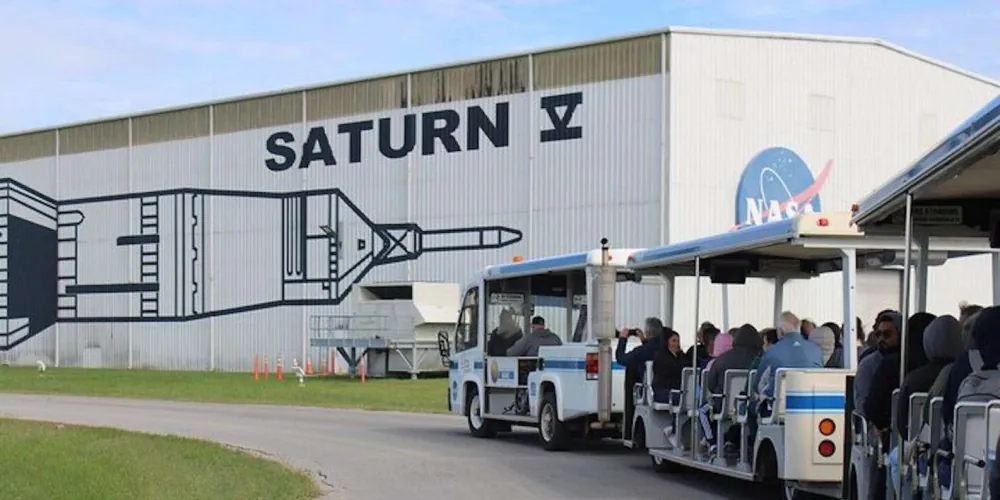
Space Center Houston is a single 250,000-square-foot building with outdoor spaces attached. It displays more than 400 artifacts across several named galleries, with four film and theater venues, live presentations and NASA campus tram tours, and almost all of it is included in one admission ticket.
This page is the complete inventory: everything you’ll come across, what it includes, how long it takes and whether it costs extra, with links to our deeper guides where they exist.
2026 changes at a glance:
- New: “The Moonwalkers” immersive film with Tom Hanks; Science Deck; Mission: Sketch; an expanded Artemis Exhibit with Commander Moonikin Campos and a Gateway habitat mockup; the Bennu asteroid sample
- Closed / under renovation: Mission Mars (no reopening date; the Artemis Exhibit now has the Orion capsule display)
- Accessibility: the Independence Plaza elevators are still under maintenance, so access is by stairs only
Buy before you go. Online tickets save about $5 over the gate, and the one paid upgrade most visitors want — Historic Mission Control — sells out on busy days. The NASA Historic Mission Control Tram Tour + General Admission (from $120, 4.7★ · 170+ reviews) books both in one step; if you only need entry, the Space Center Houston Admission Ticket starts from $29. Every ticket option is compared in our tickets guide.
What’s Included vs. What Costs Extra
Included With General Admission
All of the following:
- All indoor galleries (Starship Gallery, ISS Gallery, Astronaut Gallery, the Artemis Exhibit, Kids Space Place, Science Deck, Mission: Sketch)
- Independence Plaza (the shuttle on a 747, outdoors)
- The SpaceX Falcon 9 display (outdoors)
- The Bennu asteroid sample display
- Space Center Theater (“The Moonwalkers” and other films)
- Destiny Theater (the “Human Destiny” film)
- Mission Briefing Center live shows
- The ISS Gallery’s “Training for Tomorrow” live presentation
- Astronaut Mission Memories talks (Fridays and Saturdays)
- Three NASA Tram Tour routes: Rocket Park, the Astronaut Training Facility and the NASA Campus
Paid Add-Ons (Not Included)
| Add-on | Price | Notes |
|---|---|---|
| Historic Mission Control tram tour | ~$15 (members ~$7.50) | The most popular upgrade; sells out in advance. Also sold as the Mission Control tram + admission bundle |
| Motion simulators | $8–$10 per person | On-site, subject to availability and height limits |
| Breakfast with an Astronaut | $99.95 adult / $79.95 child | Fri–Sat, 8:30–9:30 a.m.; includes admission |
| Space Explorers: The Infinite (VR) | ~$24.50–$38.50 | Off-site, downtown — a separate trip |
| Galaxy Lights | $19.95–$27.95 | Separate evening event, November–January; trams and Starship Gallery closed during it |
| Parking | $10 + service fee | Free for members |
Members get the Mission Control discount, free parking and free simulators on Member Mornings — our membership vs. single tickets guide does the break-even math.
Other Experiences Worth Pairing With Your Visit
The galleries are self-guided, but a few bookings change how the day goes. A ticket with a NASA expert guide (from $110, 4.7★ · 60+ reviews) handles the tram timing and fills in the stories behind the hardware in Starship Gallery. Without a car, the ticket with round-trip transport from downtown Houston (from $80, 4.8★ · 330+ reviews) covers the 25-mile drive, and the downtown tunnel tour + NASA ticket with transport (from $125, 4.7★ · 70+ reviews) adds Houston’s underground walkway system to the same day. Closer to NASA, Kemah Boardwalk and the Clear Lake waterfront are about 15 minutes away for dinner afterwards.
Gallery by Gallery
Starship Gallery
Included · Ground floor · 45–60 minutes · All ages
The flagship artifact hall, and the reason Space Center Houston sits in a different category from most science museums. The spacecraft here are genuine flown hardware, displayed with very little separating you from them.
What’s inside:
| Artifact | Notes |
|---|---|
| Mercury 9 “Faith 7” | Gordon Cooper’s capsule; the last Mercury flight |
| Gemini 5 | Pete Conrad and Gordon Cooper, 1965 |
| Apollo 17 Command Module “America” | The capsule that brought the last men home from the Moon |
| Skylab 1-G Trainer | Full-size walk-through orbital workshop trainer |
| Lunar Module replica | Full-scale; walk beneath it |
| Lunar Roving Vehicle trainer | The electric car that drove on the Moon |
| Explorer 1 replica | America’s first satellite, 1958 |
Also here is the Lunar Samples Vault, which Space Center Houston describes as the world’s largest public display of Moon rocks, kept in pure nitrogen. It includes the touchable Moon rock, a polished slice of Apollo 17 basalt collected in 1972 and 3.8 billion years old. You reach in through an opening and touch it with one finger.
The gallery is kept quite dark to protect the artifacts, so prepare children who are sensitive to low light.
→ Deep dives: Moon Rocks and the Lunar Samples Vault · Apollo Missions
Destiny Theater
Included · At the entrance to Starship Gallery · 15 minutes · All ages
The short film “Human Destiny”, built from NASA archival footage, plays continuously from opening and introduces the story of the space program before you walk into Starship Gallery. You can skip it and go straight into the gallery, but it gives children and first-timers useful context.
Independence Plaza
Included · Outdoors, next to the building · 30–45 minutes · All ages (stairs required)
The only place in the world where the public can walk through both a space shuttle replica (Independence) and the genuine NASA 905 Boeing 747 that carried shuttles.
You enter the shuttle on the flight deck, walk through the mid-deck, step into the payload bay, then go down through the 747, whose interior tells the story of the shuttle carrier aircraft program with video and original hardware.
Elevators under maintenance. As of mid-2026 the Independence Plaza elevators are not operating, and access is by stairs only across a multi-story structure. Visitors with significant mobility limitations should plan around it.
Entry is timed with a free pass collected at the entrance on arrival, and slots fill quickly on peak days.
→ Full guide: Independence Plaza
SpaceX Falcon 9 Booster
Included · Outdoors, next to Independence Plaza · 10–15 minutes · All ages
Displayed horizontally, raised 14 feet off the ground: a genuine SpaceX Falcon 9 first-stage booster (B1035), which flew twice in 2017 on CRS cargo missions to the International Space Station. Space Center Houston says it is one of only two Falcon 9 boosters on public display anywhere, and it was the center’s first commercial space exhibit.
Astronaut Gallery (Spacesuit Collection)
Included · Ground floor · 20–30 minutes · All ages
One of the world’s most comprehensive public collections of astronaut apparel: genuine flown and flight-qualified suits spanning six decades, from the Mercury era through the Shuttle program and into the ISS years.
The standout is Pete Conrad’s Apollo 12 lunar surface suit, one of only two Moon-worn suits displayed outside the Smithsonian and still visibly coated in lunar dust.
Also here: Michael Collins’ Apollo 11 biological isolation garment, John Young’s STS-1 escape suit, Kathryn Sullivan’s Shuttle EMU, Wally Schirra’s Apollo 7 coveralls, and a portrait wall of every NASA astronaut who has flown.
→ Full guide: NASA Spacesuits and the Astronaut Gallery
International Space Station (ISS) Gallery
Included · Ground floor · 30–45 minutes · All ages
A detailed look inside the orbiting station, updated with 4K video and regularly refreshed with personal items loaned by astronauts.
What’s inside:
- Flown ISS artifacts — packaged food, water-purification hardware, a hatch cover showing micrometeoroid impacts
- A Cupola training mockup (the multi-window observation dome)
- Robonaut 2, NASA’s first humanoid robot in space
- Living-quarters and waste-management mockups
- A live Mission Control console showing real-time ISS data
Live presentation: “Training for Tomorrow” (20 minutes) runs in the gallery, a guided look at how astronauts prepare for and live on the station. Check the daily schedule for times.
The Artemis Exhibit
Included · Permanent gallery · 30–45 minutes · All ages
The center of Space Center Houston’s “what’s next” story. Expanded significantly in 2026, it is now the main gallery for the return to the Moon.
What’s inside:
- Commander Moonikin Campos — the actual manikin from the commander’s seat of the Artemis I Orion crew module, wearing the orange Orion Crew Survival System suit. It was named for Apollo 13 engineer Arturo Campos after a public vote with more than 300,000 entries.
- Orion capsule display — a representative capsule you can photograph inside
- Northrop Grumman Gateway Habitat mockup — a 14.5-foot, 7,500-pound lunar-station module
- An Artemis-vs-Apollo comparison timeline, a design-your-own lunar habitat station, a mission-patch station and an inflatable Moon photo spot
- Current status (as of 2026): Artemis I flew in November 2022 (uncrewed); Artemis II flew April 1–10, 2026 (a crewed lunar flyby); Artemis III is targeted for 2027 (an Earth-orbit lander test); the first crewed landing, on Artemis IV, is targeted for 2028
→ Full guide: Moon to Mars: Artemis, Orion & What NASA Is Building Next
Mission Mars — Under Renovation (2026)
Not currently available. The former standalone Mission Mars gallery, which held a touchable Mars meteorite, a virtual Martian sunset wall, a real-time rover weather display, an Orion capsule and a launch simulator, is closed. Its official page says “Mission Mars is currently under renovation”, with no reopening date, and it no longer appears on the official list of exhibits. For Orion, go to the Artemis Exhibit, which has an Orion capsule display.
Many third-party travel guides still describe Mission Mars as open. That copy is out of date. Check the official spacecenter.org exhibits page for the current status.
Kids Space Place
Included · Plan 30–60 minutes for families · Best for children under 10
A dedicated children’s area with a multi-level indoor climb structure (slides and foam-ball launchers), STEM interactive exhibits and a quieter zone for younger children. It makes a good mid-afternoon reset when younger kids are flagging.
→ Full guide: Visiting Space Center Houston with Kids
Science Deck
Included · Main Plaza, second floor · New in 2025 · 20–40 minutes · All ages
A hands-on citizen-science lab where visitors carry out real experiments tied to current ISS research themes: biology, physical sciences, human research, Earth observation and engineering. There are staff-led demonstrations and self-guided lab tables, and a “science concierge” on the floor helps you pick activities that suit your children’s ages.
Mission: Sketch
Included · Main Plaza · New in 2025 · 10–15 minutes · All ages
Color your own rocket, choose a destination (the Moon, Mars, Europa or Titan), and watch it launch on a 26-foot-wide central screen with your design on it. Light and fun, and good at the start or end of a visit.
Space Center Theater: “The Moonwalkers: A Journey With Tom Hanks”
Included · Five-story, 270-degree 4K Dolby screen · About 50 minutes · All ages
The headline film in the center’s renovated main theater. Co-written and narrated by Tom Hanks with director Christopher Riley (In the Shadow of the Moon), it tells the Apollo story and looks ahead to Artemis through newly filmed astronaut interviews, set to an original score by Anne Nikitin recorded by the Royal Philharmonic Orchestra at Abbey Road. It opened on February 14, 2025; the VIP premiere the night before included the Artemis II astronauts and Apollo 11 Flight Director Gene Kranz.
Shows run hourly. The theater also screens other space documentaries and the occasional feature film, so check the daily schedule.
Mission Briefing Center (Live Shows)
Included · Central Plaza · 15–20 minutes · All ages
Docent-led live presentations on what NASA is flying right now: current ISS operations, Artemis program updates and cargo missions. This is the first room you walk into, and catching a show early gives you the context for everything else.
Astronaut Mission Memories (Live Talks)
Included · Fridays and Saturdays, 11:30 a.m. and 1:20 p.m.
A 30-minute talk by a veteran NASA astronaut who shares mission memories and takes questions. The astronaut changes from event to event, and no extra ticket is needed. It’s the budget alternative to the full Breakfast with an Astronaut program.
The NASA Tram Tours
Three routes included; one paid add-on
The trams are the only way the public gets onto the working Johnson Space Center campus, and they’re the most popular part of the day. Boarding passes are first-come, first-served at Guest Services or through the app, so go there as soon as you arrive, before anything else.
| Route | What you see | Included? | Time |
|---|---|---|---|
| George W.S. Abbey Rocket Park | The genuine Saturn V rocket, displayed horizontally | ✅ Free | ~25 min on site |
| Astronaut Training Facility | Building 9 — ISS mockups, Orion, a lunar lander cabin, robots | ✅ Free | ~90 min total |
| NASA Campus Tour | A broader narrated drive around the campus | ✅ Free | ~60 min |
| Historic Mission Control | The restored Apollo-era control room and a 14-minute AV presentation | ❌ ~$15 | ~90 min total |
Our NASA tram tour guide covers boarding passes, timing and what each route actually shows.
Rocket Park and the Saturn V
The centerpiece of the Rocket Park route is one of three surviving Saturn V rockets, and the only one made up entirely of flight-certified hardware. It is 363 feet long and lies horizontally in its own air-conditioned building, so you can walk its full length past the five F-1 engines.
Also in Rocket Park: the Apollo 13 crew statue, three smaller Saturn-family rockets on outdoor display, and the building renamed in 2021 for longtime JSC director George W.S. Abbey.
→ Full guide: Rocket Park and the Saturn V
The Astronaut Training Facility (Building 9)
An elevated walkway above the Space Vehicle Mockup Facility, the working hall where astronauts train on full-scale hardware. The floor in July 2026 held an ISS module stack, an Orion capsule mockup, the Blue Origin Blue Moon Mk2 lunar lander crew cabin (in use since May 2026), the Gateway HALO module, a Boeing Starliner trainer and the Valkyrie robot. Sometimes astronauts and engineers are working below you, though seeing them is down to luck.
→ Full guide: The Astronaut Training Facility
Historic Mission Control (Paid Add-On)
The actual Apollo-era Mission Operations Control Room 2 (MOCR-2) in Building 30, restored to its July 20, 1969 configuration at a cost of $5 million and reopened in June 2019. It has been a National Historic Landmark since 1985. You watch from the original 74-seat VIP gallery while a 14-minute light-and-sound show uses genuine Apollo 11 mission audio to bring the consoles back to life.
Book it in advance. It sells out days ahead on weekends and during school holidays. The Mission Control tram tour + general admission bundle (from $120) secures your seat when you buy your ticket.
→ Full guide: Historic Mission Control
Paid Experiences
Breakfast With an Astronaut
$99.95 adult / $79.95 child (ages 4–11) — includes general admission
Friday and Saturday mornings, 8:30–9:30 a.m. in The Food Lab, catered by Wolfgang Puck. You hear a veteran astronaut’s presentation, take part in a Q&A and receive a personalized photo. Capacity is limited, so book in advance.
Motion Simulators
$8–$10 per person · On-site · First-come, first-served
Hydraulic motion simulators with height and age restrictions (check them on-site). The VR spacewalk simulator puts you in a suit outside the ISS. Availability varies, and members get them free on Monthly Member Mornings.
Space Explorers: The Infinite
~$24.50–$38.50 · Off-site: 2000 Edwards Street, downtown Houston · Age 8+
This one is not at the Space Center. It’s a separate, standalone VR experience at Silver Street Studios (Sawyer Yards), roughly 25 miles from NASA Parkway: about 40 minutes inside a life-scale ISS replica, including the first spacewalk filmed in 3D. The minimum age is 8, and children aged 8–12 need a parent-signed waiver and must be accompanied by someone 14 or older. Treat it as a separate Houston outing.
Outside and Seasonal
Bennu Asteroid Sample
Included · Main Plaza · A few minutes
A 0.15-gram fragment of the 4.5-billion-year-old asteroid Bennu under a magnifying glass. It is one of only three public places in the world showing an OSIRIS-REx sample (the others are the Smithsonian’s National Museum of Natural History and the University of Arizona), on a two-year NASA loan, with crew presentations running hourly.
Galaxy Lights (Seasonal)
Separate ticket: $19.95–$27.95 · Evenings, roughly mid-November to early January
Texas’s largest space-themed holiday light show: a roughly 200-foot LED tunnel, a 30-foot SLS rocket, Apollo lanterns, LED swings under the 747, fire pits, hot cocoa and the short film “Holidays in Space.”
Important: during Galaxy Lights, the NASA Tram Tours and Starship Gallery are closed. Galaxy Lights is a holiday light walk, not a substitute for daytime admission. If you want both, buy daytime admission and a separate Galaxy Lights ticket.
→ Full guide: Best time to visit, including Galaxy Lights
Shopping and Dining
SpaceTrader is the main gift shop near the entrance and exit, selling mission patches, models, apparel and space food. Members and Houston CityPASS holders get 10% off.
The Food Lab is the main place to eat: pizza, sandwiches and snacks at museum prices. A weekend food truck adds to it, and a covered outdoor picnic area allows outside food (it isn’t permitted inside the building except for documented dietary or medical needs). Hours, parking and re-entry are covered in our hours and parking guide.
Recommended Order for a First-Time Visit
- Arrive at opening. School-term weekdays fall outside the center’s named peak times of weekends, holidays and summer.
- Go straight to Guest Services for your tram boarding pass. Everything else can wait; the tram can’t.
- Mission Briefing Center — catch a live show (15 minutes) to get your bearings.
- Your tram slot — ideally before the summer heat peaks and before the afternoon crowds build.
- Starship Gallery — the artifact heart of the museum, with the Apollo 17 command module, Gemini 5 and the touchable moon rock.
- Astronaut Gallery — 20–30 minutes, alongside Starship Gallery.
- Independence Plaza — the shuttle on the 747, outdoors; do it before it gets too hot.
- ISS Gallery — 30–45 minutes including the live presentation.
- Artemis Exhibit — 30–45 minutes.
- “The Moonwalkers” in the Space Center Theater — a 50-minute air-conditioned break.
- Kids Space Place — if you have young children, this is their afternoon reset.
- Mission: Sketch and Science Deck — lighter experiences for whatever energy is left.
- SpaceTrader gift shop — leave time before closing.
Total: 5–6 hours for a thorough first visit. Enthusiasts and families easily fill a full day. For timing by season and day of the week, see our best time to visit guide.
Ready to go? Buy online to save on the gate price and add Historic Mission Control in the same step — the Mission Control tram + admission bundle does both, or compare every ticket.
Frequently Asked Questions
What exhibits are at Space Center Houston?
The main galleries are Starship Gallery (Mercury, Gemini, Apollo 17, Skylab and the moon rocks), Independence Plaza (the shuttle on a 747), the ISS Gallery, the Astronaut Gallery (spacesuits), the Artemis Exhibit (Moonikin Campos and Orion), Kids Space Place, Science Deck and Mission: Sketch. The building also has four film and theater venues, and admission includes three NASA Tram Tour routes. All of these are included with general admission; Historic Mission Control on the tram, the motion simulators and Breakfast with an Astronaut are paid upgrades.
Can you walk inside the space shuttle at Space Center Houston?
Yes. Independence Plaza holds a full-scale shuttle replica (Independence) mounted on the original NASA 905 Boeing 747, and you can walk through both. As of mid-2026 the elevators are under maintenance, so access is by stairs only.
Is Mission Mars still open at Space Center Houston?
No. The official Mission Mars page says it is “currently under renovation”, gives no reopening date, and the exhibit no longer appears on the official list of exhibits. The Artemis Exhibit has an Orion capsule display instead. Many third-party guides still describe it as open; that information is out of date.
What is “The Moonwalkers” at Space Center Houston?
A 50-minute immersive film in the main Space Center Theater, co-written and narrated by Tom Hanks, telling the story of the Apollo program and looking ahead to Artemis. It opened on February 14, 2025, is included with general admission, and shows run hourly.
What is Commander Moonikin Campos?
The manikin that sat in the commander’s seat of the Orion crew module during NASA’s Artemis I mission in 2022. It carried radiation, acceleration and vibration sensors to measure what a human crew would have experienced. It’s now on permanent display in the Artemis Exhibit, named for Apollo 13 electrical power engineer Arturo Campos after a public vote.
How long does Space Center Houston take?
Most visitors spend 4–6 hours. If you want to ride all three free tram routes, see two or three galleries in depth, watch a film and walk through Independence Plaza, plan a full day. Arriving at opening and staying until closing is very manageable.
Is the Historic Mission Control tour worth it?
Consistently, yes — it’s the most praised paid upgrade in visitor reviews. You see the actual Apollo-era control room, restored to July 20, 1969, with genuine mission audio and relit consoles. Book it when you buy your admission ticket, because it sells out in advance on busy days.
See NASA's Home of Human Spaceflight
Join the visitors who rate Space Center Houston a highlight of their trip — the Saturn V rocket, Historic Mission Control, the world's largest public moon-rock collection, and Independence Plaza. Reserve timed admission with free cancellation.
Check Availability & Book